

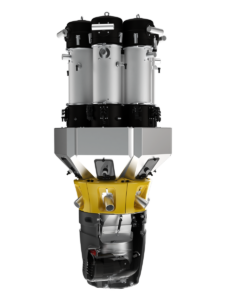
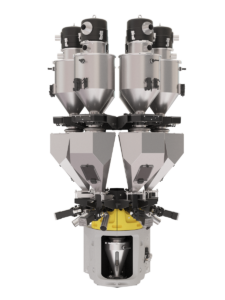
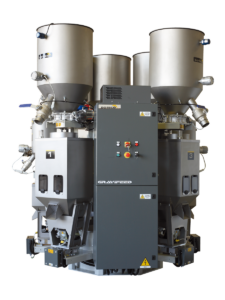
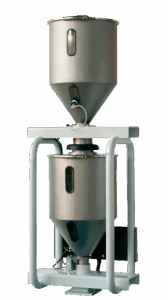
Blending systems may represent just a fraction of an entire extrusion line, however they play key role in the manufacturing process. While choosing a new blender, there are many different aspect to consider beyond the price. In this post, by introducing the concept of Total Cost of Ownership, we will uncover all the costs that will impact on a investment on the long run and provide some insights that might be useful when choosing your next dosing system.
WHAT LIES BELOW THE SURFACE?
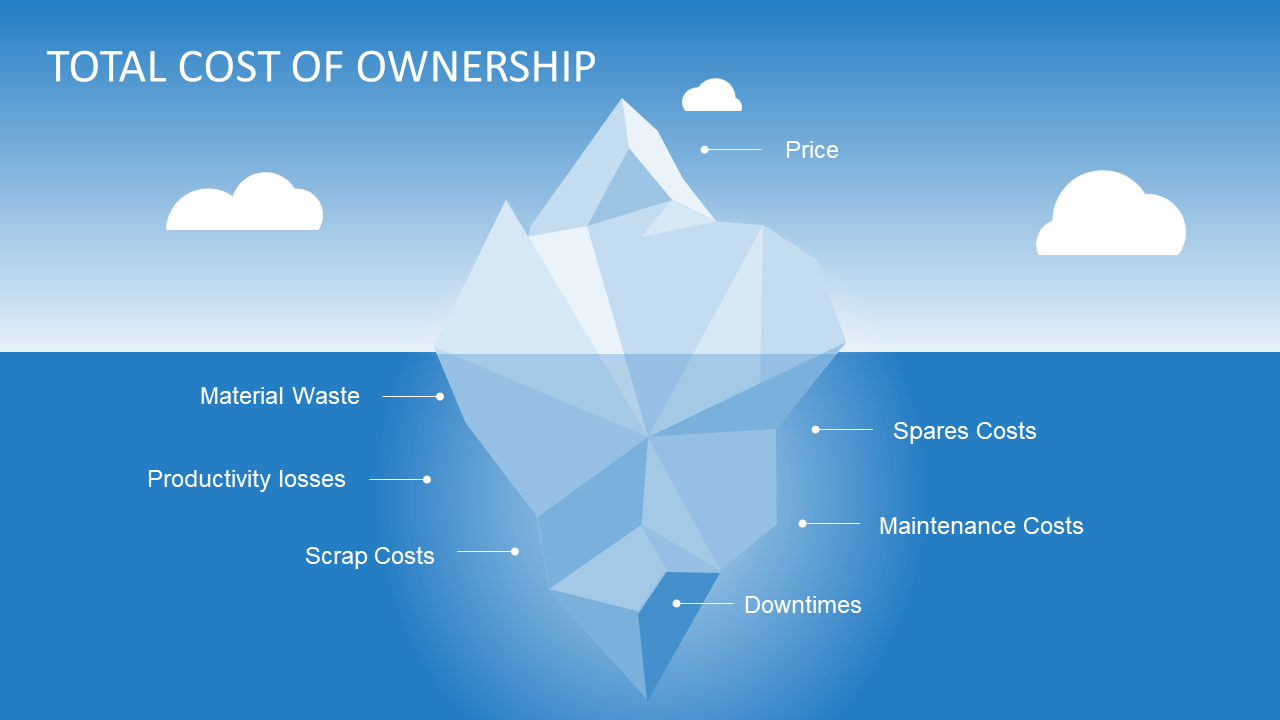
When it comes to product’s related costs, price is just the tip of the iceberg. Hiding below the “surface” there are many different aspects, some evident, other more subtle that will greatly influence the yeld of an investement:
- maintenance
- spare parts
- downtimes
- scraps
- material consumption
- labor costs
- final product quality
- service availability
These elements may seem marginal at first, but over the lifecycle of a dosing system they make the difference between a profitable investment and one that erodes margins.
The purpose of adopting a Total Cost of Ownership (TCO) approach is precisely to reveal what is hidden behind the price.
TOTAL COST OF OWNERSHIP
The Total Cost of Ownership (TCO) includes not only the direct costs related to acquiring the product, but also all the indirect costs that will be incurred — or generated — throughout the entire lifecycle of the equipment.
Considering all these aspects provides a broader and more complete understanding of what the product truly is and the value it can deliver over time.
TCO APPLIED TO DOSING SYSTEMS
We can divide the TCO into four main categories.
ACQUISITION COSTS
This includes not only the price of the blender, but also:
- accessories
- commissioning
- personnel training
- supplier reliability
- availability of after‑sales service
A low purchase price may be appealing, but if the supplier cannot guarantee support, spare parts or long‑term continuity, the real cost of the investment increases quickly.
PERFORMANCE‑RELATED COSTS
Performance efficiency is a crucial aspect that has to be taken in serious consideration while exploring product alternatives on the market.
Poor performance may affect negatively both the productivity and the marginality.
An inaccurate or slow‑responding dosing system can generate:
- extra material consumption (higher set‑points to compensate for inaccuracy)
- scrap and waste (slow start‑ups, unstable recipe changes)
- loss of quality (variations in color, thickness, mechanical properties)
Precision is not a technical detail, it is a direct economic factor.
TIME‑OPTIMIZATION COSTS
As the saying goes: time is money. So it is very important to adopt solutions that help to reduce downtimes.
- Production changeover time: some blenders can be cleaned and emptied more quickly.
- Ease of repair: parts availability, clear instruction manuals, fast interventions.
- Ease of use: simple and quick configuration, with minimal hardware/software changes to avoid errors and reach production speed as quickly as possible.
Reducing downtime means recovering hours of production every week.
MAINTENANCE COSTS
Maintenance cost is the last (but not least) in our list.
This category includes how often parts must be replaced due to wear and tear or how often the blenders require maintenance.
Here are the maintenance-related costs:
- frequency of interventions
- lifespan of components
- need for periodic calibrations
- technical service fees
- availability of spare parts
A dosing system that requires frequent maintenance or expensive spare parts quickly becomes more costly than a more robust and stable one.
WHY TCO MATTERS MORE THAN PRICE
When comparing two blenders, the right question is not:
“How much does this blender cost?”
but rather:
“How much will this blender cost me over the next 10 years?”
A cheaper system at purchase may:
- consume more material
- generate more scrap
- require more spare parts
- stop more often
- have a shorter lifespan
- worsen product quality
In the end, the “cheaper” blender becomes the most expensive one.
CONCLUSIONS
Price is easy to compare. Value is not.
A TCO‑based approach allows you to evaluate a dosing system not for what it costs today, but for how much it will save (or cost) tomorrow.
When choosing your next dosing system, look beyond the price. Consider precision, reliability, maintenance, service and process stability — these are the factors that determine real long‑term profitability.